

The highlights of South Africa
South Africa is a multifaceted travel destination and is peppered with countless tourist highlights. This selection provides an overview of the country's most popular destinations. We will be happy to advise you on putting together your own individual tour.

Cape Town and Cape Peninsula »
Wine regions »
Cape Coast and Overberg »
Little Karoo & Karoo Semi-Desert »
Garden Route »
Tsitsikamma National Park and Addo Elephant Park »
Sunshine Coast and Amatola Mountains »
Wild Coast »
Durban and Surroundings »
Lesotho »
Drakensberg Mountains and Golden Gate National Park »
Hluhluwe and iSimangaliso »
Eswatini »
Kruger Park and Panorama Route »
Johannesburg, Pretoria, and Soweto »
Limpopo Province »
Pilanesberg and Madikwe »
Northern Cape »
Cederberg Mountains and West Coast »
Cape Town and Cape Peninsula
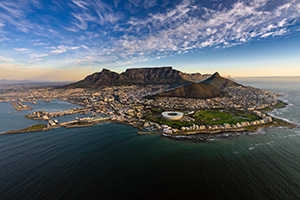
Cape Town, the "Mother City" and oldest city in South Africa, is the starting or ending point for most travelers to explore the Rainbow Nation. Cape Town is rightly considered one of the most beautiful cities in the world and offers many historic buildings, first-class restaurants, countless shopping opportunities, great beaches, diverse landscapes and varied activities.
Table Mountain

Table Mountain is the main attraction and landmark at the same time. A cable car or various hiking trails take you up to around 1000m, from where you can get the best overview of the city with a breathtaking view. The last cable car only descends after sunset, making Table Mountain the perfect place for an unforgettable sundowner. However, due to bad weather, the mountain can be closed, even at short notice. Visitors should therefore take the first available opportunity and not wait until the last day of their stay.
V&A Waterfront

The tourist heart of the city beats on the Victoria & Alfred Waterfront. Countless stores and restaurants invite you to stroll and linger. The ferry to Robben Island, the former prison island during the apartheid era, also departs from here. The high-security camp, where Nelson Mandela also spent many years of his life, is now a museum. Former prisoners bring visitors closer to the history of the struggle for freedom and independence. The Zeitz MOCAA, the Museum Of Comtemporary Art Africa, is also located on the waterfront. It is the only museum on the entire continent that is dedicated exclusively to contemporary African art.
center
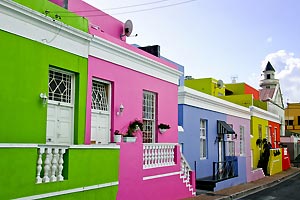
A stroll through the center of Cape Town is also worthwhile. Sights such as the flea market on Green Market Square, Cityhall and Company's Garden are within easy walking distance of the Waterfront. Most of the museums are also located around Company's Garden. Along Bree Street and Kloof Street you will find the best restaurants in the city center, while Long Street is where the nightlife pulsates. The colorful Bo-Kaap district is a popular photo motif. Trendy people swear by the trendy De Waterkant district.
food markets

Good food is very important to Capetonians. Cape Town's diverse food markets are therefore a great opportunity to mingle with the locals. The two most famous markets are the Oranjezicht City Farm Market on the waterfront and the Neighbourgoods Market in Woodstock. There are other markets in Sea Point, Hout Bay, and Noordhoek, among other places.
Beaches

For sun-seekers, Cape Town offers a variety of beaches. The most famous Atlantic beaches can be found at Clifton, Camps Bay and in the suburbs of Bloubergstrand, Llandudno, Hout Bay and Noordhoek. However, the cold Atlantic current means that not everyone enjoys swimming. The waters of the Indian Ocean in False Bay are somewhat warmer. There are beautiful beaches in Gordons Bay, Strand, Muizenberg, St. James, Fishhoek and Simons Town. The latter is also home to Boulders Beach, which has become famous for its penguin colony. Here you can watch the penguins on footbridges built through the dunes and even swim with them in one section.
Cape Peninsula
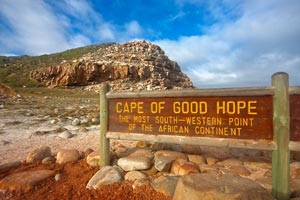
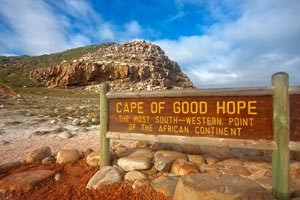
The Cape of Good Hope Nature Reserve south of Cape Town, with Cape Point and the Cape of Good Hope, is also a must-see. In addition to the southwesternmost point of Africa, the Cape Peninsula offers interesting flora and fauna. Various hiking trails lead through the reserve. Other highlights include Chapmans Peak Drive (one of the most beautiful coastal roads in the world, connecting Noordhoek and Hout Bay), the old wine region of Constantia (home to the oldest wineries in the Cape) and the Kirstenbosch National Botanical Garden (one of the most beautiful botanical gardens in the world). You should allow at least three days for the "Mother City," but even in two weeks, Cape Town and its surroundings never get boring.
Wine regions

Only about 50 km from Cape Town lie the most famous South African wine regions of Stellenbosch, Paarl, and Franschhoek. While Paarl is mainly of interest to wine connoisseurs, Franschhoek and Stellenbosch in particular offer a wealth of sights and scenic highlights for active visitors who are not so interested in wine.
Stellenbosch
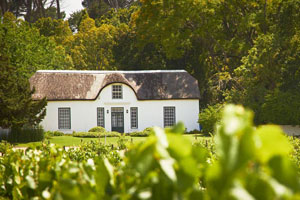
Stellenbosch is South Africa's second oldest town and the center of South African wine production. Many of the first settlers' houses, built in the Cape Dutch style, are still standing, most of them along Dorp Street. Some of the buildings have been converted into a museum displaying the furniture and everyday objects used by the first settlers. The Village Museum, for example, comprises four houses dating from around 1700 to 1850. Each house represents the style of an era and is furnished accordingly. Also located in the historic center is the Moederkerk, a church built in the neo-Gothic style. But thanks to tourism and the local university, Stellenbosch is a very lively place. The town center also has many art galleries and small boutiques that sell more than just the usual souvenirs. Numerous cafés and restaurants invite visitors to linger. Of course, there are also many wine shops selling the region's fine wines.
Franschhoek

Franschhoek, meaning "French Corner," was founded in 1688 by Huguenots. The French immigrants primarily promoted agriculture and viticulture. The conspicuous Huguenot Monument commemorates the city fathers who were persecuted in their homeland of France because of their Protestant faith. Life in Franschhoek takes place along the main road, the R45. Here you will find the historic church and the Huguenot Monument, as well as many restaurants, cafés, boutiques, and shops. Overall, however, it is much more tranquil here than in the much livelier Stellenbosch. Most of the wineries are located outside the town, also along the R45 or accessible from the R45. Franschhoek has now regained its position as the "restaurant capital" of the country; nowhere else are there so many top restaurants per capita.
Paarl

The third largest wine region in the Western Cape offers some interesting wineries (e.g. Nederburg, the country's largest producer) and sights (e.g. the futuristic-looking Taal Monument and the Afrikaans Museum, both of which commemorate the lives of the first white settlers). Paarl lies in a valley between the Hottentots Mountains and the Paarl Mountain Nature Reserve. From a distance, you can see a huge rock shining like pearls in the sunlight, Paarl Mountain (translated as "Pearl Mountain"), which offers an excellent vantage point. With over 100,000 inhabitants, Paarl is quite large and does not have such a cozy town center as Stellenbosch or Franschhoek. Nevertheless, there are some beautiful jacaranda avenues in the center, which glow in magnificent purple during the jacaranda blossom season in October and November. In addition to wine, fruit is now mainly grown in the region.
Other wine regions

Other exciting and up-and-coming wine regions can be found in the coastal region between Hermanus and Botrivier, in the Swartberg Mountains near Riebeek-Kasteel, in Tulbagh, and in the Little Karoo between Robertson and Montagu (see below).
Walküste and Overberg

From June to November, there are good whale watching opportunities along the entire coast of South Africa, even from land. In the area from Hermanus (around 100 km east of Cape Town) to De Hoop National Park, there are particularly large numbers of whales very close to the coast. This is why this section is often referred to as the Whale Coast.
Hermanus

Hermanus is a very touristy place and offers countless hotels, guest houses, restaurants, cafés and stores. In the whale season, the town is bursting at the seams. Despite all the hustle and bustle, the whale sightings from the countless cliffs of the steep coast are breathtaking. Nowhere else in South Africa do the impressive marine mammals come so close to the coast. But Hermanus has much more to offer, making it well worth a visit even outside the whale season. The Hemel-En-Aarde Valley is the country's most up-and-coming wine region. The Fernkloof Nature Reserve offers beautiful walks through the fynbos vegetation with magnificent sea views. Grotto Beach is one of the most beautiful beaches in the region.
Arniston

The small coastal town of Arniston is much quieter and is one of the visual highlights of the area, offering two unique attractions: the traditional fishing village of Kassiesbaai and the Waenhuiskrans Cave. The white sandy beaches are endless and whale watching (seasonal) is wonderful from the dunes. Highlights of the area are the De Hoop and De Mond nature reserves.
Cape Agulhas

Cape Agulhas is the southernmost point of Africa. The striking lighthouse and the stone tablet marking the meeting point of the Atlantic and Indian Oceans offer great photo opportunities. If you are traveling in the area, you can take a detour, but from the N2 you have to think carefully about whether you want to drive a 200 km detour. On the other hand, it is much less crowded here than at the Cape of Good Hope on the Cape Peninsula. The beach in the nearby village of Struisbaai offers Caribbean flair.
Overberg

But the hinterland of the Walküste, the Overberg district, is also interesting. If you have some time, you should take the local regional roads between Swellendam and Somerset West instead of the N2. There are endless farms, up-and-coming wineries, cozy little towns like Greyton and Elim, historical sites near Genadendal, secluded nature reserves, and mighty mountain ranges to discover.
Little Karoo and Karoo semi-desert

Much more exciting than driving along the coast on the N2 is the route via the famous Route 62, the old connecting road between Cape Town and Port Elizabeth, which exudes a Wild West atmosphere. The similarity in name to the American Route 66 is therefore not entirely coincidental. The most beautiful part of Route 62 is between Montagu and Oudtshoorn. The route is well developed and actually always empty. You won't get much faster on the busy N2, but Route 62 is significantly more beautiful.
Robertson and Montagu
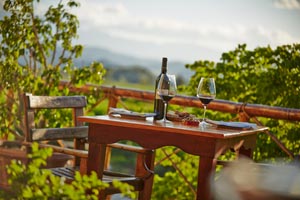
The towns of Robertson and Montagu are considered the transition between the classic wine regions and the Little Karoo semi-desert. Robertson has some exciting wineries and restaurants to offer. Montagu is scenically beautiful and offers great hiking opportunities.
Oudtshoorn

Oudtshoorn is the "ostrich capital" of South Africa and the jewel of the Little Karoo semi-desert. There are many ostrich farms here in the dry interior and, more recently, some interesting wineries. The Cango Caves, a huge stalactite cave landscape, are definitely worth a visit. Oudtshoorn itself offers plenty of restaurants and stores.
Karoo National Park

The Karoo National Park is located near Beaufort West. This unique landscape is home to antelopes, mountain zebras, rhinos and around 200 different bird species.
Graaff-Reinet

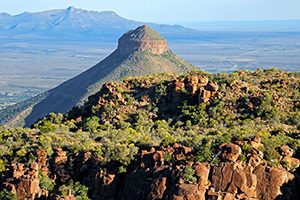
Graaff-Reinet is the heart of the Karoo. The fourth oldest town in South Africa is a living museum and architecturally more than interesting. Over 200 buildings are listed as historical monuments. The Valley Of Desolation in the nearby Camdeboo Nature Reserve is also famous for its bizarre rock formations - a paradise for hikers.
Cradock

The Mountain Zebra National Park near Cradock is one of the most scenic parks in the region and is home to rare Cape mountain zebras, lions, buffalo, and various antelope species. Cradock itself is a cozy little town where time seems to have stood still.
Garden Route
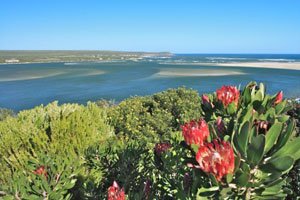
The Garden Route is certainly one of South Africa's most famous attractions. Nature has clearly left its mark on this area. The fynbos vegetation typical of this region alternates with pristine forests, beautiful stretches of coastline, diverse river and lake landscapes and mighty mountain ranges in the hinterland. The most beautiful part of the Garden Route lies between Wilderness and the Tsitsikamma National Park.
Wilderness

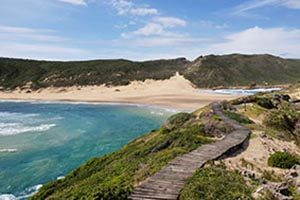
Wilderness is a dreamy little place between the imposing Outeniqua Mountains and the endless Indian Ocean. Even in the height of summer, it is unusually green here and rarely really hot. The beaches are endless and mostly deserted. The national park of the same name is ideal for hiking. The flora and fauna are unique. In short: the ideal place to relax and linger.
Sedgefield

Little Segdefield is the big unknown on the Garden Route for tourists from overseas. South Africans tend to spend their vacations here. The large Wild Oats Farmers Market takes place on Saturday mornings, where many local products from the surrounding farms and galleries are sold. The beaches are unique. The hinterland is characterized by large lake landscapes and dense forests.
Knysna
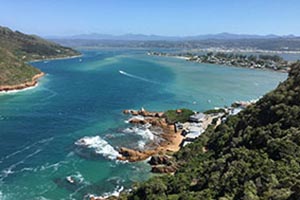
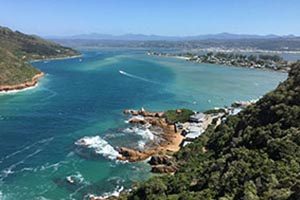
Knysna with its famous lagoon is the center of the Garden Route. The lively town is inviting with its many restaurants, cafes, boutiques and stores. Boat trips to the lagoon and the Featherbed Nature Reserve depart from the waterfront, and in the whale season also to the open sea. Knysna is the "Oyster Capital" of South Africa, famous for its excellent oysters. Nearby Buffalo Bay is ideal for a day at the beach. The dense forests of the hinterland are ideal for hiking.
Plettenberg Bay

Plettenberg Bay is one of the wealthiest places in the country. Many wealthy Johannesburgers have built their vacation villas on the beach here. There are great swimming opportunities at the mouth of the Keurbooms River. The river also offers good leisure activities such as fishing, canoeing and more. The picturesque Robberg Nature Reserve is located on a headland.
The Crags

The Crags is home to some very interesting animal sanctuaries. In Monkeyland you can walk through the jungle with various free-roaming primates. Birds Of Eden is the largest free-flight aviary in the southern hemisphere. Tenikwa and Jukani are breeding stations for big cats. These sanctuaries have a strict "do not touch" policy.
Tsitsikamma National Park and Addo Elephant Park

Tsitsikamma National Park marks the end of the Garden Route and the beginning of the more pristine Eastern Cape province, which stretches from Addo Elephant Park to the Wild Coast. While infrastructure in the southwestern part of the Eastern Cape has improved in recent years, road conditions and accommodations in the northeastern part are significantly more rudimentary.
Natures Valley

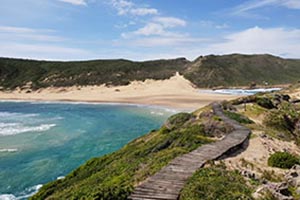
In the western part of Tsitsikamma National Park, Nature's Valley, there are many excellent hiking trails along secluded beaches and through pristine forests. To best enjoy the beauty of this area, leave the N2 and take the old R102 through the valley. Nature's Valley is one of the highlights of the region and is rarely crowded, even in high season. There are some great hiking trails to unique viewpoints.
Storms River
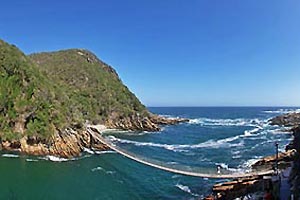
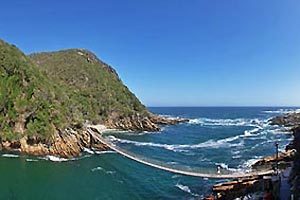
The eastern part of the national park is much more touristy. There are also many hiking trails in Storms River Restcamp. The Suspension Bridge, a large suspension bridge over the Storms River, is a popular photo opportunity. Boat and kayak tours into the pristine forests can be booked on the river. Tsitsikamma National Park is the largest contiguous primeval forest in South Africa. Here you will find some of the so-called Big Trees, yellowwood trees that are over 800 years old and over 40 meters tall.
Addo Elephant Park
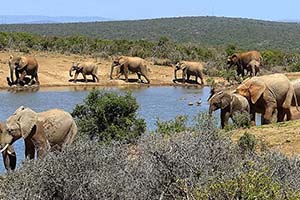
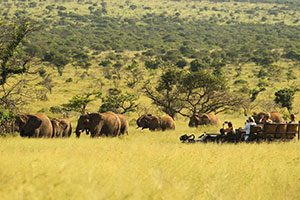
Addo Elephant Park is the westernmost of the national parks that is home to the "Big Five," namely lions, elephants, buffalos, rhinos, and leopards. However, there are only a small number of big cats. The entire Eastern Cape is malaria-free, which is particularly interesting for families with children. The park now extends to the coast, making it South Africa's only "Big Seven" national park, where you can also see whales (seasonally) and great white sharks. As Addo is a state park, there can be a lot of day visitors, especially during the holiday season.
Private game reserves

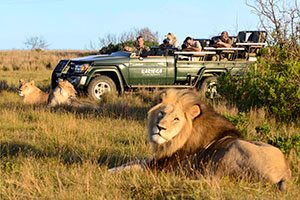
East of Addo Elephant Park are several private game reserves, most of which are also home to the Big Five and offer a better chance of spotting big cats. Accommodation prices are significantly higher, but you get a more exclusive bush experience than in the state-run and often overcrowded Addo Elephant Park. Some of the private reserves also offer a limited number of safaris for day visitors. While the private reserves in the interior of the country tend to consist of dry mountain and savannah areas, the reserves near the ocean attract visitors with lush green bush landscapes, crisscrossed by mighty rivers on their way to the sea.
Sunshine Coast and Amatola Mountains

The Sunshine Coast between St. Francis Bay in the west and Port Alfred in the east is one of the sunniest regions in South Africa and a popular vacation destination for South Africans. The Amatola Mountains in the interior, a region relatively unknown to international tourists, are a paradise for outdoor enthusiasts.
Jeffreys Bay and St. Francis Bay
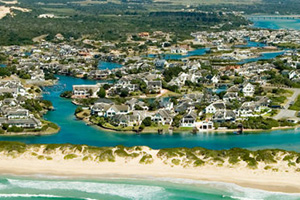
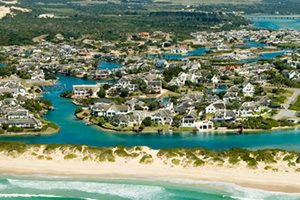
Jeffreys Bay is the surfing hotspot on the Sunshine Coast and thrives on its beautiful beaches. In the nearby Kabeljous Nature Reserve, there are various hiking trails through the diverse coastal and bush landscape. St. Francis Bay is perhaps the most beautiful resort on the Sunshine Coast. The almost exclusively thatched roofs and the Mediterranean-inspired architecture of the harbor district make you forget for a moment which country you are in. The white sandy beaches invite you to swim and enjoy a variety of water sports. In Cape St. Francis Nature Reserve, you can enjoy wonderful hikes through the fynbos vegetation.
Port Elizabeth

Port Elizabeth (new name Gqeberha) is South Africa's fifth largest city and oscillates between being a bustling industrial city and a sunny holiday paradise. PE, as the locals call their city, has some good shopping opportunities and beautiful city beaches along Algoa Bay. Unfortunately, the city center has long since seen better days.
Port Alfred
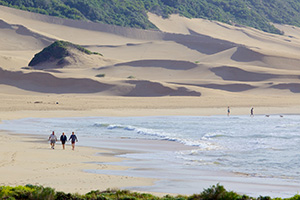
Port Alfred is located at the mouth of the Kowie River, which divides the former fishing village in two. Port Alfred has become a popular vacation spot for South Africans. Its miles of wide, fine sandy beaches are perfect for long walks. Water sports enthusiasts can enjoy diving, swimming, water skiing, and, of course, surfing. There is even some nightlife along the historic Wharf Street.
Hogsback

Hogsback in the Amatola Mountains is still an absolute insider tip. The mountain scenery and pristine forests are breathtaking. Hiking trails lead to various waterfalls, and mountain bikers will also get their money's worth. The town offers some esoteric curiosities such as an eco shrine, an 11-circle labyrinth, and the famous bathtub with a view.
East London

East London marks the end of the well-developed tourist destination of the Sunshine Coast. The port city on the Buffalo River has an interesting old town center and several beautiful city beaches. Nearby Chintsa, the gateway to the Wild Coast, offers pure beach life.
Wild Coast

On the "wild coast" between East London and Durban, you can experience a pristine South Africa. This is why the Wild Coast is one of the country's most exciting and challenging highlights. The infrastructure is not comparable to the rest of the country. There are only a few and usually quite basic accommodations and the coast is usually only accessible via dirt roads. The two main traffic arteries of the Wild Coast, the N2 and the R61, are tarred, but there are many potholes. Both roads wind their way over many hills and through many villages. You should allow considerably more time for this route than for overland journeys in other areas of South Africa.
Qunu

Typical of the region are the many green hills with the typical rondawels, the colorful round huts of the local Xhosa population, to which Nelson Madela also belonged. In Mvezo, you can visit the ruins of his birthplace, among other things. In Qunu, the place of his childhood, are his baptismal church, the ruins of his high school and the newly built Nelson Mandela Youth & Heritage Center. His grave is also located here on the family's own property.
Coffee Bay

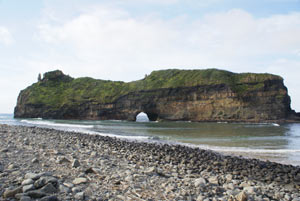
Coffee Bay is one of the most beautiful places on the coast, about 80 km from the N2 and can be reached via a paved road. The bay is well sheltered, so swimming is possible without any problems even in heavy seas (caution: no shark nets). Nearby is the natural stone bridge "Hole In The Wall", an attraction in the region, which you can also hike to from Coffee Bay. By car, there is a 20 km drive on a dirt road, but this can be managed with an SUV.
Port St. Johns
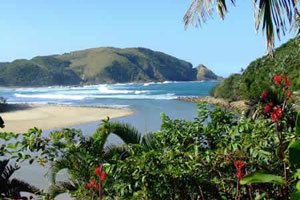
Port St. Johns is situated at the mouth of the mighty Mzimvubu River. There are three beautiful beaches surrounded by evergreen rainforests. North of Port St. Johns via Lusikisiki in the direction of Mbotyi, you reach Angel Falls and Magwa Falls on unpaved roads, the latter falling 140 m into the depths. At Second Beach, the road branches off to Silaka Nature Reserve. The reserve covers a total of 400 hectares and offers hikers magnificent indigenous coastal forests along a dramatic stretch of coastline.
Durban and surroundings

The original Wild Coast ends at the provincial border between the Eastern Cape and KwaZulu-Natal, where the well-developed South Coast begins. This stretches as far as Durban, where it merges into the North Coast or Dolphin Coast. There are also exciting landscapes to discover in the hinterland.
South Coast

Between Port Edward and Amanzimtoti, there is a string of small coastal resorts. Countless beaches and golf courses ensure carefree vacation experiences for South Africans. Near Margate, in the nature reserve of the same name, lies Oribi Gorge, a spectacular gorge on the Mzimkhulwana River. At Lake Eland, a huge suspension bridge spans the river.
Durban

Durban is the bustling metropolis of the province of KwaZulu-Natal and a melting pot of cultures. In addition to Zulus and descendants of European immigrants, one of the largest Indian communities outside India lives here. The famous Golden Mile beach promenade is regularly spruced up, but you should be very careful there, especially in the evening. Highlights of the Golden Mile include the Moses Mabhida World Cup Stadium on North Beach and uShaka Marine World on South Beach, an entertainment center with an aquarium, water slide park, restaurants, and shops. The city center and harbor, once tourist magnets, have unfortunately seen better days.
North Coast
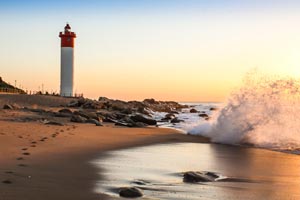
The resorts of Umhlanga, Umdloti, and Ballito north of Durban are much quieter. Here you will find great beaches, good shopping, and countless restaurants. Umhlanga is home to one of the largest shopping malls in the southern hemisphere and the Natal Sharks Board, an information center about the life of sharks in the Indian Ocean. In contrast to the South Coast, the North Coast – also known as the Dolphin Coast – is much more popular with international tourists.
Valley of a Thousand Hills

The Valley of a Thousand Hills stretches from Natal Table Mountain south of Pietermaritzburg, following the Umgeni River valley, to the Indian Ocean. Take the N3 towards Pietermaritzburg and exit at Hillcrest. The villages of Hillcrest, Bothas Hill, Drummond, Inchanga, and Cato Ridge are well worth a visit and offer stunning views of the valley. There are many small Zulu villages and nature reserves to admire along the route.
Lesotho
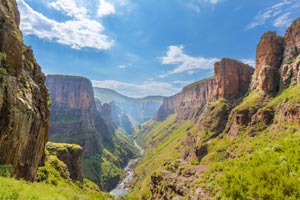
The Kingdom of Lesotho, which is completely surrounded by South Africa, is one of the highest countries in the world and is also known as the "Roof of Africa". The parts of the country lie at an altitude of between 1400 and 2000 meters, with some mountain peaks even exceeding 3000 meters. The high plateaus are criss-crossed by river valleys and inselbergs. Lesotho is a sovereign state with its own entry requirements.
The infrastructure is quite rudimentary. Only a few roads can be used by normal cars. The tourist offer is also manageable. However, those who embark on the Lesotho adventure will be rewarded with magnificent nature and plenty of unspoiled nature. In the South African winter from June to August, it can sometimes snow heavily. Lesotho therefore has the only ski area in southern Africa with cross-country ski trails, pistes, lifts and ski huts.
Drakensberg Mountains and Golden Gate National Park
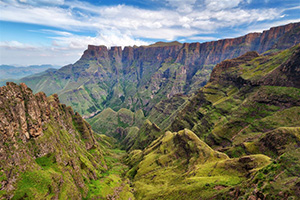
For the descendants of European immigrants, their jagged peaks make them the "Dragon Mountains," while the indigenous Zulu people call them "uKhahlamba," which means "barrier of spears." The uKhahlamba-Drakensberg Park has been a UNESCO World Heritage Site since 2000 and is one of the most impressive mountain regions in South Africa. To the north, near the small artists' village of Clarens, lies the Golden Gate Highlands National Park.
Southern Drakensberg Mountains and Sani Pass

Himeville is a good starting point for exploring the southern Drakensberg Mountains. Guided tours depart from here, traveling up Sani Pass to Lesotho. The highest mountain pass in South Africa and the only southern road connecting the two countries, it is only accessible to 4×4 vehicles. You will be rewarded with breathtaking views of the rugged, barren high mountain landscapes of the southern Drakensberg Mountains, dominated by the Thaba Ntlenyana mountain peak in Lesotho, the highest peak in southern Africa. The Garden Castle State Forest, Cobham State Forest, and Coleford Nature Reserve also offer great landscapes and good hiking trails.
Central Drakensberg Mountains

Monks Cowl is the name of a peak in Giants Castle Game Reserve, which has given this beautiful mountain hiking area its name. The region between Champagne Castle and the Cathkin Mountains is one of South Africa's most impressive mountain landscapes, with peaks reaching over 3000 m. In addition to an impressive bird life, mammals such as antelopes and zebras also live here. You will have the opportunity to discover cave paintings by the San people, the indigenous people of South Africa.
Spioenkop Nature Reserve and Battlefields

Between Winterton and Ladysmith lies the Spioenkop Nature Reserve on the dam of the same name, which dams the Tugela River. In the reserve, you can see giraffes, buffalos, rhinos, zebras, and various species of antelope. In 1900, a battle between the British and the Boers took place here. Visitors can learn about the historical events on the Battlefield Trail. If you want to learn more about the Boer Wars, you can continue on to Ladysmith and visit the Siege Museum there. Between Ladysmith and Dundee, there are a number of historic battlefields to visit.
Northern Drakensberg
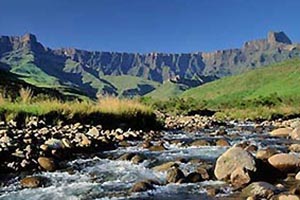
The Royal Natal National Park is the highlight of the northern Drakensberg Mountains. The main attraction is the Amphitheater, a 5 km long and up to 500 m high rock massif. The Tugela Falls, with a drop of 948 m, are the second highest in the world. There are over 80 km of hiking trails in the park, ranging from 3 km to 45 km in length. The most impressive day hike is the Tugela Gorge Trail to the foot of the waterfalls, which takes six to eight hours. You can also hike to the Amphitheater, but this is only possible via the village of Phuthaditjhaba.
Golden Gate Highlands National Park

The national park at the foot of the Maloti Mountains has formed a single entity with the Qwa Qwa National Park for many years. The park's main attractions are the massive, colorful sandstone formations and rock sculptures, which glow golden yellow in the evening light and gave the park its name. There are some interesting cave paintings by the San, the indigenous people of South Africa, to see. The park is home to many species of antelope, wildebeest, and the rare mountain zebra. The small town of Clarens offers a number of galleries, boutiques, and cafés.
Hluhluwe and iSimangaliso
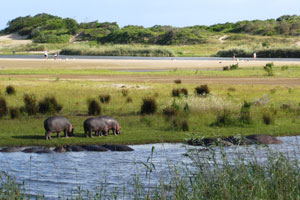
The region around the small towns of St. Lucia, Hluhluwe, and Mkuze offers countless highlights. Zulu culture, Big Five game reserves, secluded beaches, and endless lake landscapes offer a wealth of attractions—a unique beach and bush experience. Here in northern KwaZulu-Natal, also known as Zululand, there is a slight seasonal risk of malaria.
Hluhluwe Imfolozi Park

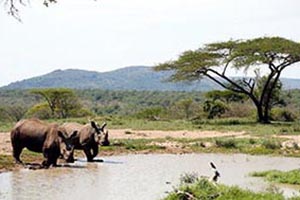
This state-owned national park is divided into the northern Hluhluwe section and the southern Imfolozi section and is one of the oldest and perhaps most beautiful game reserves in South Africa. The landscape is unique and unusually green even during the dry season in the South African winter. The park is home to the Big Five and is famous for its large rhino population. The paved and unpaved roads in the park can be easily navigated by car, although an SUV is helpful. Guided game drives in open off-road vehicles can be booked on site, and commercial tour operators are also available in St. Lucia.
St. Lucia and iSimangaliso Wetland Park

St. Lucia is a cozy holiday village with many shops and cafés between the Indian Ocean and Lake St. Lucia. The village is considered the southern center of the iSimangaliso Wetland Park, a unique nature park consisting of wetlands and coastal areas that is unlike any other in Africa. The park has been a UNESCO World Heritage Site since 1999. Covering an area of over 13,000 square kilometers, including 850 square kilometers of marine reserves and a coastline of 220 kilometers, it offers breathtaking insights into various ecosystems and animal worlds. From the clear waters of the Indian Ocean and the largely untouched sandy beaches, the landscape transitions into wooded dune areas and a mosaic of wetlands, grasslands, forests, lakes, and savannah. Of the 6,500 animal and plant species recorded to date, some are found only here or only in South Africa.
Sodwana Bay and Mkuze Game Reserve

Sodwana Bay is South Africa's diving, snorkeling, and fishing paradise. The beach here, just under 100 km from the Mozambican border, is also a dream. The nearby Mkuze Game Reserve is still a real insider tip among South Africa's national parks. Most of the park's roads are unpaved but easily accessible with an SUV. A new gate leads to the Mantuma main camp. For a short visit, we recommend the southern area around the Ndumo Pan. The park is not nearly as rich in wildlife as Hluhluwe-Imfolozi Park, but you will usually have it all to yourself.
Kosi Bay
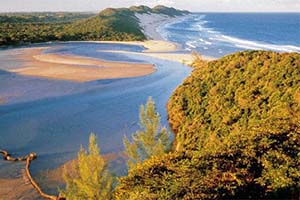
Kosi Bay is located in the northernmost part of the iSimangaliso Wetland Park and is a magical place of lakes, rivers, pristine beaches, bushland, and coastal forests. This 11,000-hectare, rarely visited part of the Wetland Park on the border with Mozambique is a subtropical paradise that is home to over 250 species of birds. To visit Kosi Bay, a four-wheel drive vehicle or transfer is necessary, and accommodation is very scarce.
Private game reserves

There are also several private game reserves around the state-owned Hluhluwe Imfolozi Park that are also home to the Big Five, but these are only accessible to overnight guests. While some of these reserves offer a solid selection of three, four, and five-star lodges, others cater exclusively to a very wealthy and exclusive clientele. In general, the state-owned national parks and private game reserves in Zululand offer better value for money than Kruger Park or Addo Elephant Park.
Eswatini

The Kingdom of Eswatini (formerly Swaziland) borders South Africa and Mozambique and offers an authentic African experience. Crossing the country is an interesting part of any trip to South Africa. Eswatini is a sovereign state with its own entry requirements.
The center of the small country is the Ezulwini Valley with the two towns of Mbabane and Manzini. The valley offers many hiking and other activities. It is also home to the Mlilwane Wildlife Sanctuary, which is home to antelopes, zebras, giraffes, crocodiles and hippos. The locals are gifted artisans and souvenirs are usually cheaper here than in South Africa. While the mountainous part in the southwest of the country is considered malaria-free, the northeastern lowlands to Mozambique have a slight risk of malaria.
Kruger Park and Panorama Route

The wildlife-rich southern part of Kruger Park and the scenic Panorama Route are the two main highlights of Mpumalanga Province and can be easily combined due to their proximity.
Kruger Park

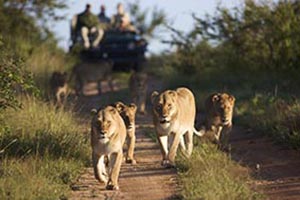
The largest and most famous national park in South Africa is the Kruger Park. It lies on the borders with Mozambique and Zimbabwe and covers an area roughly the size of the Netherlands. It is home to more than 150 different mammals, including the Big Five, over 500 different bird species, and many reptiles and amphibians. For a short stay, the southern part of the park is preferable due to its abundance of wildlife. There are paved and unpaved roads for self-drivers, but there are also providers of guided game drives in open off-road vehicles. The best time of year for safaris is the dry season in the South African winter between April and October. The grass is low, the trees have few leaves, and the animals are forced to come to the waterholes to drink. During this time, the risk of malaria is low. From November to March, it can rain more often and become very humid. During this time, the risk of malaria is higher.
Panorama Route
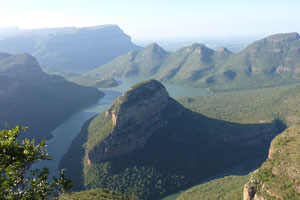
The Panorama Route leads through the most beautiful sections of the northern foothills of the Drakensberg and is one of the visual highlights of any visit to South Africa. The area around the Blyde River Canyon offers breathtaking views, countless waterfalls, bizarre rock formations and historic sites such as the former gold mining town of Pilgrim's Rest. Highlights such as God's Window, the Three Rondavels, Long Tom Pass, the Mac Mac Pools and no less than the end of the world (World's End) are very close to each other and can be admired on a round trip. Small towns such as Sabie or Graskop invite you to linger. In the higher part of the Panorama Route (Highveld), where most of the sights are located, there is no risk of malaria.
Private game reserves

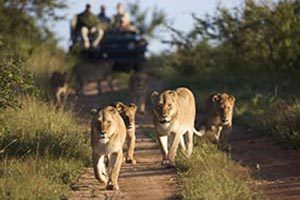
The so-called private game reserves are located on the western border of Kruger Park. In contrast to the state-owned Kruger Park, only overnight guests are allowed access here. Visitors stay in luxurious lodges and experience the beautiful flora and fauna on guided game drives under expert guidance. When the weather is good, dinner is served outdoors around a campfire. The oldest and most exclusive private reserve in Kruger Park is Sabi Sand, but there are also alternatives such as Balule, Karongwe, Kapama, and Timbavati. These are also home to the Big Five, and the risk of malaria is similar to that in Kruger Park. Most reserves no longer have fences between themselves and the state-owned Kruger Park, allowing the animals to move freely.
Johannesburg, Pretoria and Soweto

The province of Gauteng, with its three major cities of Johannesburg, Pretoria, and Soweto, is the economic engine of South Africa. Most international visitors only use the region as a point of arrival or departure, but there are also some exciting tourist and cultural attractions.
Johannesburg

Johannesburg is the country's business center and is usually the start or end point of a trip to South Africa for tourists. Unfortunately, the security situation in the city center and some suburbs is still not ideal, but there are some bright spots, such as the up-and-coming artists' district of Maboneng. The best way to experience the sights of the "City Of Gold" is on a guided tour. The northern suburbs around Rosebank and Sandton are quite quiet with many restaurants and shopping centers. There are several theme and amusement parks, such as Gold Reef City, a former gold mine with a funfair attached.
Pretoria
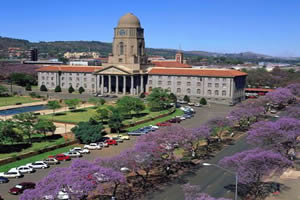
Pretoria is the country's capital and thrives on its history. There are several interesting buildings, monuments, and museums to visit here, such as the Union Buildings, Church Square, and the Voortrekker Monument. These are best visited on a guided tour. One of the city's highlights is the jacaranda blossom in October, when entire streets are transformed into avenues of purple flowers.
Cradle of Humanity

About an hour from Johannesburg or Pretoria are the Sterkfontein Caves, known as the Cradle of Humankind. Fossils of the oldest human species that lived over two million years ago were discovered in this UNESCO World Heritage Site. They are among the oldest hominin finds in the world.
Soweto
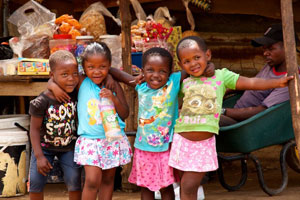
Soweto is South Africa's largest township with over a million inhabitants. Although there are now some up-and-coming and more affluent neighborhoods here, corrugated iron shacks without electricity and running water still predominate. Culturally, Soweto is very much on the rise. There are bars, restaurants, and nightclubs, and even a few hotels and guesthouses have opened here. However, tourists should only visit Soweto when accompanied by locals who know the area or on a guided tour.
Limpopo Province

Limpopo is South Africa's northernmost province and captivates visitors with its unspoiled nature and authentic wildlife in various vegetation zones. The Waterberg Mountains are home to unique Big Five game reserves with an exciting mountain range in the background. The Soutpansberg Mountains are the northernmost mountain range in the country and famous for their baobab trees. The steppe-like region of Mapungubwe, with its national park of the same name in the border triangle with Zimbabwe and Botswana, offers a great diversity of species and cultures. In the subtropical Letaba district near Tzaneen, there is still a large population of rare palm fern trees.
water mountains

The malaria-free Waterberg region is located about three hours' drive north of Johannesburg. The mountain range provides a breathtaking backdrop for the state-owned Marakele National Park and the private game reserves of Welgevonden and Entabeni. The latter consists of a plateau (Upper Escarpment) and lowlands (Lower Escarpment), which is unique in South Africa. All three game reserves are home to the Big Five and all other African wildlife and offer very good value for money.
Soutpansberge

Between the Waterberg Mountains near Polokwane and the border with Zimbabwe, the Soutpansberg Mountains form South Africa's northernmost mountain range, still an insider tip in South Africa. The region is part of the UNESCO Vhembe Biosphere Reserve and offers unspoiled nature with a rich variety of flora and fauna. Here you will discover rugged cliffs and mighty baobab trees, as well as giraffes, zebras, and various species of antelope. Bird lovers will also find plenty to enjoy.
Mapungubwe

The Mapungubwe Cultural Landscape is a UNESCO World Heritage Site near South Africa's northern border with Zimbabwe and Botswana. It is an open, expansive savannah landscape at the confluence of the Limpopo and Shashe rivers. Mapungubwe developed into the largest kingdom on the subcontinent before it was abandoned in the 14th century. The remains of the palace complexes and the entire settlement area dependent on them, as well as two former capitals, have been preserved, reflecting the development of social and political structures over a period of more than 400 years. Part of this unique cultural landscape is the Mapungubwe National Park with its striking rock formations, which is home to four of the Big Five and an impressive bird life.
Tzaneen

Tzaneen is located 724 meters above sea level and is the largest town in the Letaba district. This attractive garden city surrounded by subtropical vegetation offers every amenity and is an ideal starting point for exploring the region. A drive through the Magoebaskloof Mountains with their dense green rainforests, crystal-clear mountain streams, and thundering waterfalls is well worth the effort. Debengeni Falls are particularly popular, offering wonderful opportunities for swimming, picnicking, and hiking. The Magoebaskloof Mountains are also home to the picturesque gold mining town of Haenertsburg. It was founded in 1887 during the gold rush. The Modjadji Nature Reserve, which is unfortunately very difficult to access, is home to over 15,000 specimens of the rare palm fern "Encephalartos transvenosus."
Pilanesberg and Madikwe

The two main highlights of the North West Province are the Pilanesberg National Park and the Madikwe Game Reserve. While Madikwe has always been a magnet for financially discerning guests, until recently Pilanesberg was an inexpensive alternative to Kruger Park. Unfortunately, the provincial government has significantly increased prices – with the outcome for visitor numbers still uncertain.
Pilanesberg National Park

The malaria-free Pilanesberg National Park is located around two and a half hours' drive northwest of Johannesburg. The 55,000 hectare park is almost circular and encompasses the area of a 1200 million year old volcanic crater with a small lake in the center. The extremely scenic terrain lies in the transition zone between the dry Kalahari and the wetter lowveld, so both types of vegetation can be found here. The park is home to the Big Five and many other African wild animals and has made a name for itself in particular for its leopard breeding program.
Madikwe Game Reserve

The malaria-free Madikwe Game Reserve was opened in 1991, making it one of the newer parks in South Africa. The reserve now covers 75,000 hectares of bushland, stretching north of the small town of Groot Marico to the border with Botswana. The Dwarsberg Mountains form the southern border. The terrain consists mainly of wide grasslands and open bush plains, interrupted by isolated island mountains. Water resources are scarce, apart from the Marico River in the east of the park, so several dams had to be built. Madikwe impresses with its great biodiversity, including the Big Five.
Northern Cape

The Northern Cape, on the border with Namibia and Botswana, is South Africa's largest province in terms of area and part of the vast ecosystem of the Kalahari semi-desert. Here, you can venture off the beaten tourist track and discover unique landscapes and wildlife adapted to the environment.
Kgalagadi Transfrontier Park

The most famous national park in the region is the Kgalagadi Transfrontier Park, which was created by merging the Kalahari Gemsbok National Park in South Africa and the Gemsbok National Park in Botswana. The protected area, which is twice the size of Kruger Park, is very pristine and should only be explored with a four-wheel drive vehicle. Kgalagadi means "land of thirst." The sparse flora and fauna have adapted to the prevailing conditions. In addition to smaller mammals, you can mainly observe big cats such as lions, leopards, or the rare African wildcats, and antelopes such as elands and oryxes.
Augrabies Falls National Park
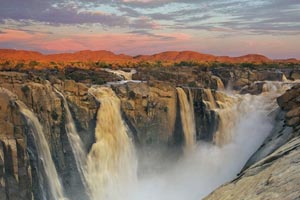
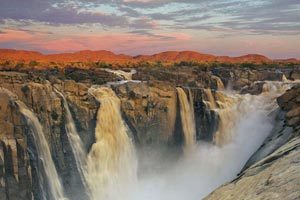
The Augrabies Falls National Park is more easily accessible, where the Orange River cascades over a width of 135m into the depths. In addition to several species of big cats and antelopes, giraffes and zebras also live here. Another attraction is Moon Rock, a massive and impressive rock formation. With a length of almost 2,200 km, the mighty Orange River is the second longest river in southern Africa and transforms parts of the otherwise dry environment into a green paradise, making it possible to grow wine in Upington, for example.
Namaqualand
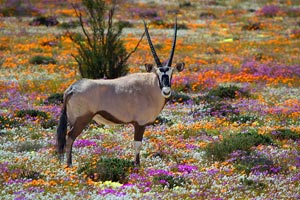
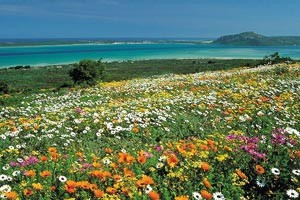
Springbok lies in the middle of a valley of rugged granite rocks. The town is the center of the diamond industry and the capital of Namaqualand. It seems like a miracle when, every August and September, the gray-brown and dreary landscape is transformed into a veritable sea of flowers of all shapes and colors. Every year after the winter rains, millions of bulbous plants and succulents sprout from the dry soil and decorate the landscape with the impressive beauty of blooming wildflowers. In Namaqua National Park, about 50 kilometers south of Springbok, there are over 3,500 different plant species, many of which are endemic and only found here. In addition to the picturesque splendor of wildflowers and scattered quiver trees, various bird species also live in this reserve. Even some mammals such as leopards, porcupines, and klipspringers are at home here.
Cederberg Mountains and West Coast

In the northwest of the Western Cape province, there are two highlights that are only slowly gaining attention in international tourism. Most visitors begin or end their trip in Cape Town and ignore these regions, which are only a few hours' drive from the Mother City. Especially during the flower season from August to September, a detour here should be considered.
Cederberg
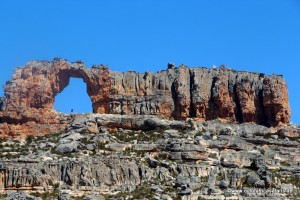
About 300 km north of Cape Town lie the Cederberg Mountains, an area that is still relatively undeveloped for tourism. This natural paradise was named after an endemic species of cedar tree, which is now very rare. The small town of Clanwilliam is a good base from which to explore the region. However, there are also some remote luxury lodges in the middle of endless nature. The center is the Cederberg Wilderness Area with an area of over 70,000 hectares, a gem for hikers with a thirst for adventure. In the South African summer it is very hot, in winter snow can fall on the mountains, which are up to 2000m high. Incidentally, the famous rooibos tea, which only grows here, comes from the Cederberg.
West Coast
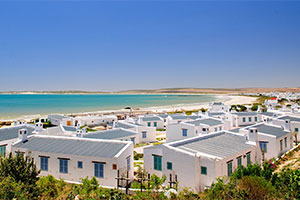
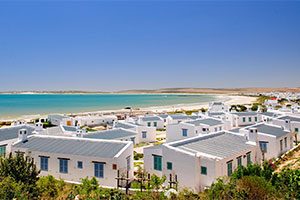
The almost northern European-looking west coast offers some interesting fishing villages, which have so far only played a role for the locals in terms of tourism. Good food, with lots of seafood of course, is the main attraction here, along with all kinds of water sports. Small and interesting places are Lamberts Bay, Elands Bay and Yzerfontein, while Langebaan and Paternoster are somewhat busier. The latter is the gourmet stronghold of this coastal region; the Wolfgat Restaurant, which seats just 20 people, was named the best restaurant in the world in 2019.
West Coast National Park
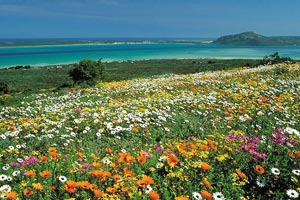
One highlight is the easily accessible West Coast National Park, located around an hour and a half's drive northwest of Cape Town, which is one of the largest protected areas on South Africa's coasts with an area of over 30,000 hectares. White sandy beaches, crystal blue sea and lush fynbos vegetation are the visual eye-catcher, enhanced by the wildflower bloom in the months of August to September. In the South African winter months from June to November, whales are drawn to the shallow lagoons. Mammals such as various antelope species and zebras as well as impressive birdlife can also be observed.